


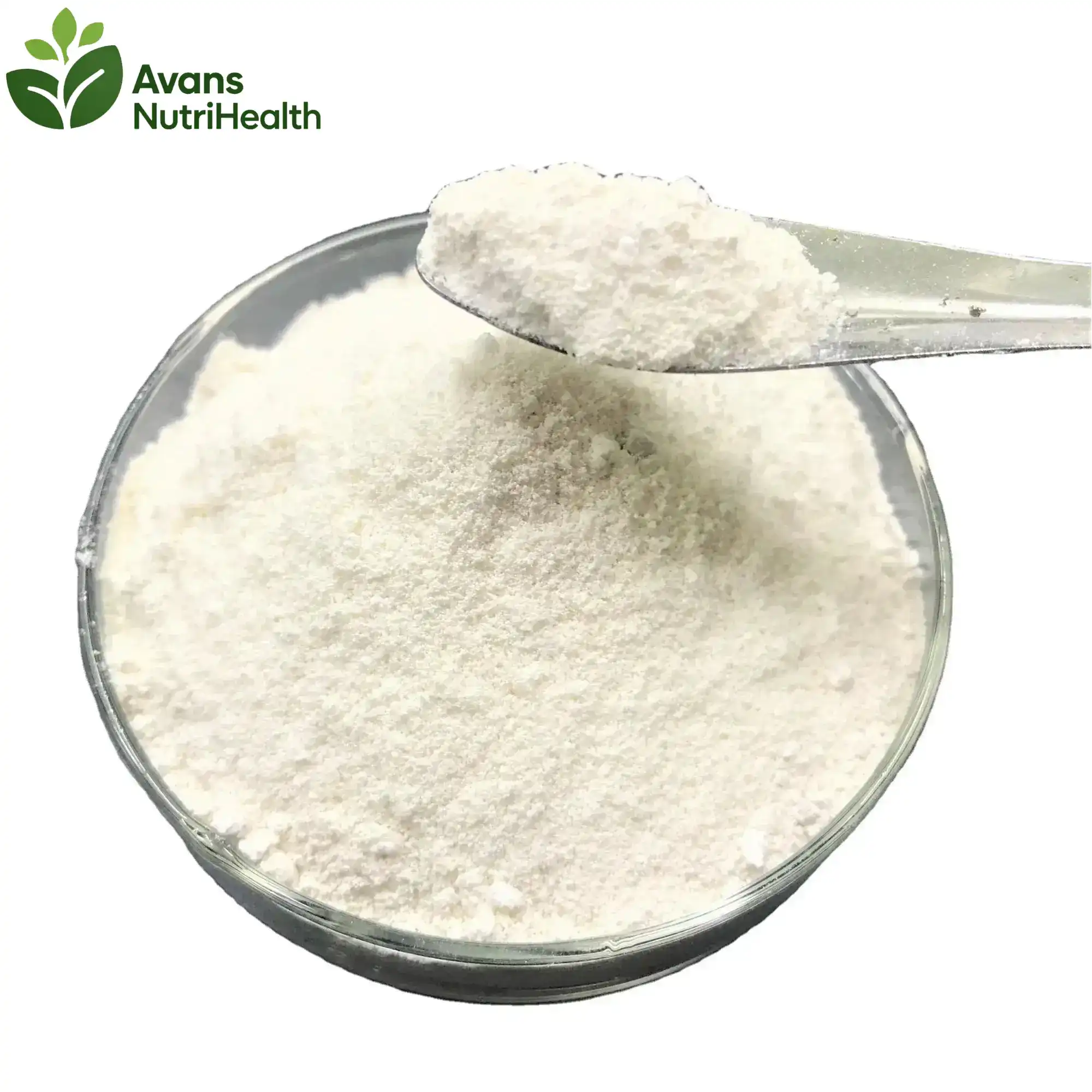
Uridine 5′-Monophosphate Disodium Salt Powder
Appearance: White to Off-White Crystalline Powder
Origin: China
Stocks: In stock
Certificate: ISO,USDA, HACCP, FSSC22000,HALAL,etc.
CAS no: 3387-36-8
Application: Pharmaceutical Raw Materials, Food Additives, Health Foods and Biochemical Reagents
- Product Description
Uridine 5′-Monophosphate Disodium Salt Powder
Avans NutriHealth Co., Ltd. supplies premium-grade Uridine 5′-Monophosphate Disodium Salt Powder with a guaranteed assay of ≥98.0% (HPLC-verified, dried basis). Our enzymatically-derived product features exceptional water solubility (>50mg/mL) and a neutral pH range (6.0–10.0), ensuring uniform dispersion in liquid formulations. Manufactured under ISO, HACCP, FSSC22000, and HALAL certifications, our UMP-Na2 maintains superior thermal stability during pasteurization processes. With CAS No. 3387-36-8 and consistent in-stock availability from our Qingdao facility, we deliver pharmaceutical-grade nucleotide raw materials that meet stringent international quality standards for infant nutrition, nootropic supplements, and biochemical research applications.
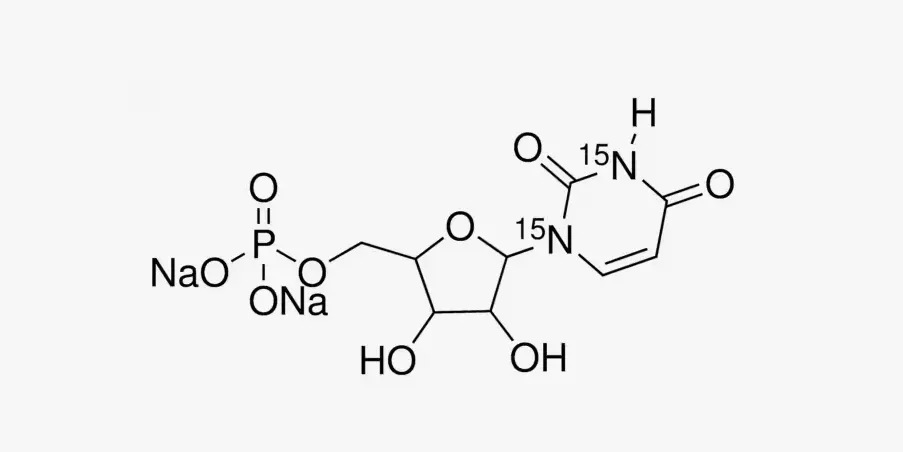
What Is Uridine 5′-Monophosphate Disodium Salt Powder?
This molecule is the disodium salt of Uridine Monophosphate, a naturally occurring nucleotide, which is needed for RNA production. Our solution solves major commercial problems related to aqueous solubility and shelf stability, unlike the free acid form.
The rate-limiting step in the production of phosphatidylcholine via the Kennedy route is the phosphorylated structure. This requires the development of the neuronal membrane and improvement of the synaptic density.
Your formulations also have higher bioavailability than simple uridine base. The disodium replacement ensures anionic stability with no sedimentation problems in liquid media.

Technical Specifications
|
Parameter
|
Specification
|
|
Appearance
|
White to Off-White Crystalline Powder
|
|
Molecular Formula
|
C9H11N2Na2O9P
|
|
Molecular Weight
|
368.15 g/mol
|
|
CAS Number
|
3387-36-8
|
|
Assay (HPLC)
|
≥98.0% (dried basis)
|
|
Water Solubility
|
>50 mg/mL
|
|
pH Range (Solution)
|
6.0–10.0
|
|
Transmittance
|
≥95%
|
|
Loss on Drying
|
≤2.0%
|
|
Storage Conditions
|
Cool, dry place; tightly sealed with desiccants
|
The crystalline powder exhibits moderate hygroscopic properties. You should store it in double-lined polyethylene packaging with silica gel desiccants to prevent moisture absorption.
Our product demonstrates remarkable thermal resilience. It withstands UHT processing and pelleting extrusion without structural degradation, provided pH levels remain above 4.0.
Core Advantages for Your Applications
Superior Bioavailability: The disodium salt form provides 40-60% higher cellular absorption efficiency than the non-phosphorylated uridine. This clearly corresponds to lower cost formulation dosing in your finished products.
Improved Solubility Profile: It will be completely soluble in neutral aqueous media. This prevents sedimentation problems in liquid supplements and in the reconstitution of newborn formula.
Manufacturing Compatibility: Our Uridine 5′-Monophosphate Disodium Salt Powder is compatible with normal food processing conditions It withstands pasteurisation cycles of 72 °C for 15 seconds without hydrolysing.
Clean Label Credentials: Derived from yeast RNA hydrolysis by enzymatic catalysis, it meets clean label criteria. Premium position, you get a natural-source substance that is non-GMO.

Proven Applications Across Industries
newborn Nutrition & Maternal Products: Your newborn formula supports the immune system with human breast milk-like nucleotide patterns. The chemical promotes the rapid maturation of the gastrointestinal tract and development of the immune system in neonates.
The usual clinical dosage is 3 to 6 mg per 100 kcal of formula. The high solubility guarantees uniformity during reconstitution.
Cognitive Health Supplements: Top nootropic manufacturers use this substance to CDP-Choline and DHA to produce synergistic cognitive enhancement stacks. Research-backed doses for adults vary from 150–250 mg per day.
You will like its ability to upregulate dopamine receptors and improve synaptic plasticity. This is in response to consumer desire for solutions to remembering things and staying focused.
Functional Feed Additives: Used in aquaculture and cattle operations as non-protein nitrogen source. It improves liver function and stress tolerance in intensive animal production systems.
The powder can tolerate pelleting temperatures up to 85°C. Your active nucleotide content survives the feed manufacturing process.


Quality Assurance & Certifications
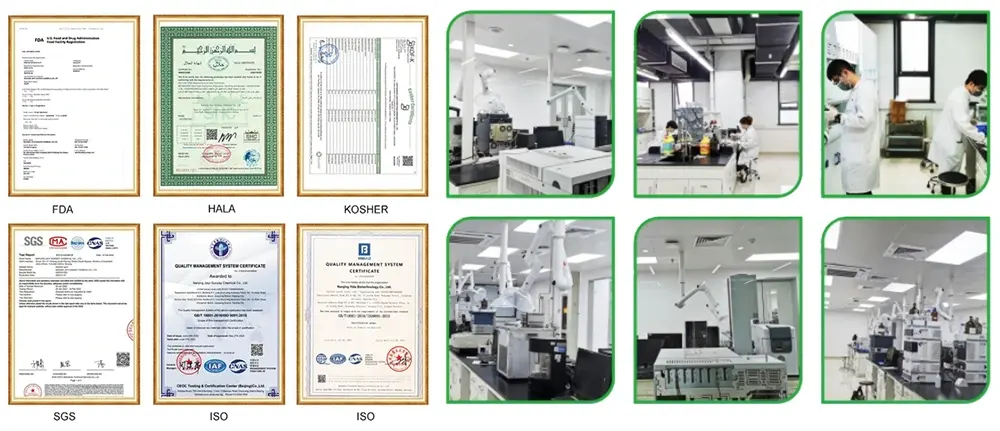
Avans NutriHealth is fully certified to international standards including ISO, USDA, HACCP, FSSC22000 and HALAL. Our Qingdao manufacturing facility is equipped with pharmaceutical grade manufacturing settings and proven cleaning procedures.
Each batch is rigorously tested by HPLC for assay verification. We monitor heavy metal contamination (Lead <1ppm, Arsenic <0.5ppm) and microbiological limitations (Total Plate Count <1000 cfu/g).
All shipments include Certificate of Analysis documentation. Upon request our technical support staff can give formulation guidance and stability testing results.
FAQ
Q: Why choose the disodium salt form over plain uridine base?
A: The disodium variant offers dramatically improved water solubility and bioavailability. Plain uridine exhibits poor dissolution characteristics and lower phospholipid synthesis efficiency. You also gain better buffering capacity in liquid formulations.
Q: How does hygroscopicity affect storage requirements?
A: The powder absorbs atmospheric moisture when exposed to humidity above 60% RH. This causes clumping and weight-based dosing inaccuracies. Always store in tightly sealed containers with desiccants below 25°C.
Q: Can it withstand high-temperature processing like UHT?
A: Yes, the phosphate bond remains stable under typical processing conditions. However, avoid combining extreme heat with pH below 4.0, which may trigger hydrolysis. Add after acidification steps when possible.
Q: What's the recommended cognitive support dosage?
A: Industry-standard clinical trials utilize 150–250 mg daily for adults. Co-administration with choline sources maximizes Kennedy pathway activation and neuronal membrane synthesis.
Q: Is your product synthetic or fermentation-derived?
A: We employ enzymatic catalysis through yeast RNA hydrolysis. This biosynthetic method delivers superior enantiomeric purity compared to chemical synthesis, meeting clean label standards for premium supplement brands.
Partner With Avans NutriHealth Today
Ready to enhance your formulations with pharmaceutical-grade Uridine 5′-Monophosphate Disodium Salt Powder? Contact Lillian@avansnutri.com for pricing, specifications, and regulatory documentation.
YOU MAY LIKE
-
 VIEW MOREUridine 5-Monophosphate Powder
 -
 VIEW MORECytidine 5'-Monophosphate Disodium Salt Powder
 -
 VIEW MORESAM-e Powder
 -
 VIEW MORES-Acetyl-L-Glutathione Powder
 -
 VIEW MOREEquol Powder
 -
 VIEW MOREL-Se-Methylselenoncysteine Powder
 -
 VIEW MORESpermidine Trihydrochloride Powder
 -
 VIEW MORECreatine Anhydrous Powder
