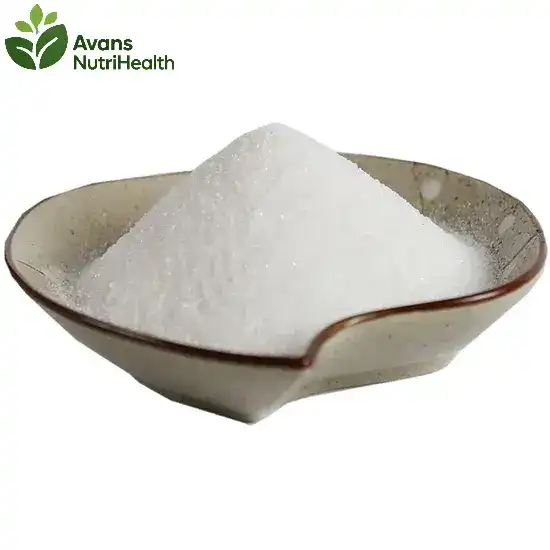
D-Fructose-1,6-Diphosphate Trisodium Salt Octahydrate
D-Fructose-1, 6-Phosphate Trisodium Salt
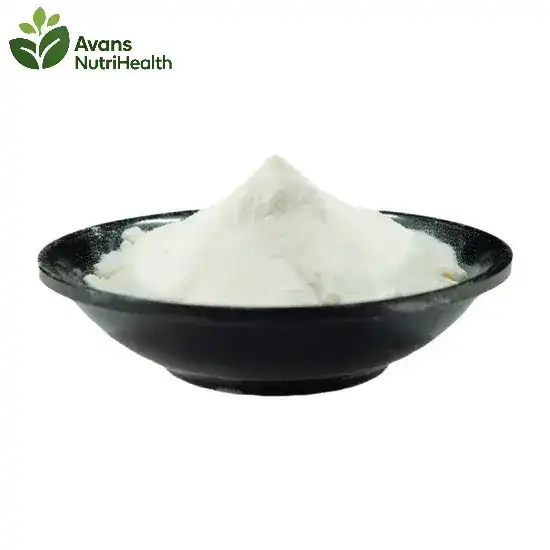
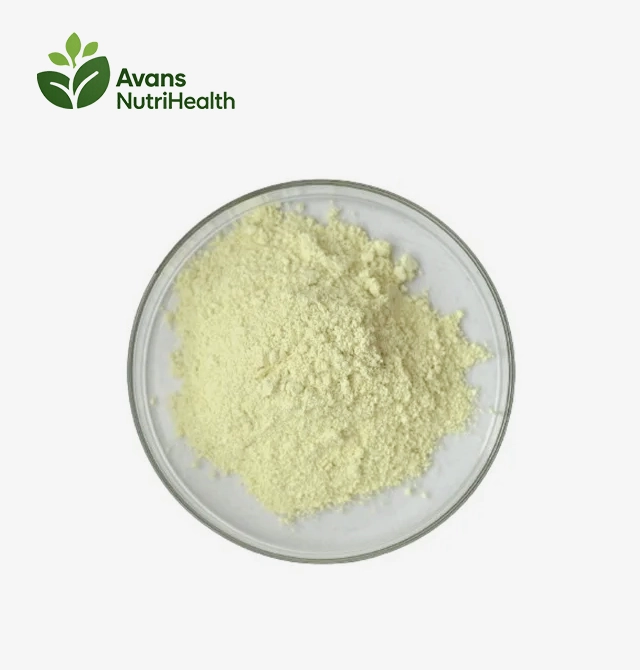
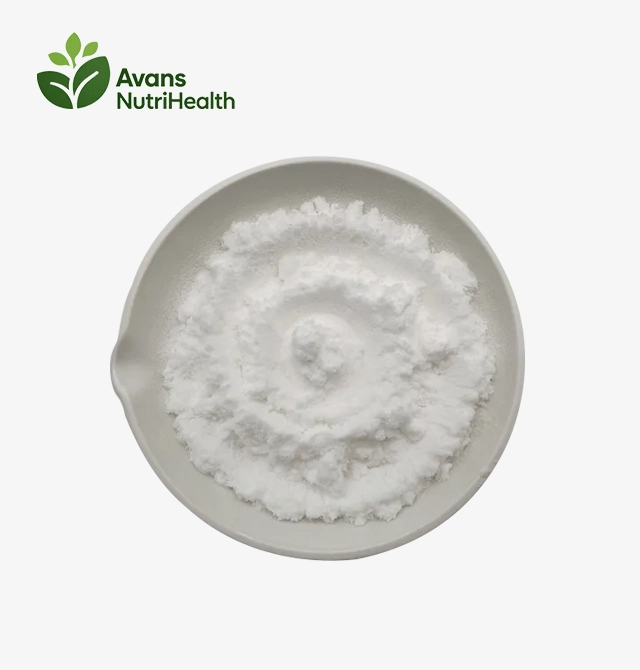
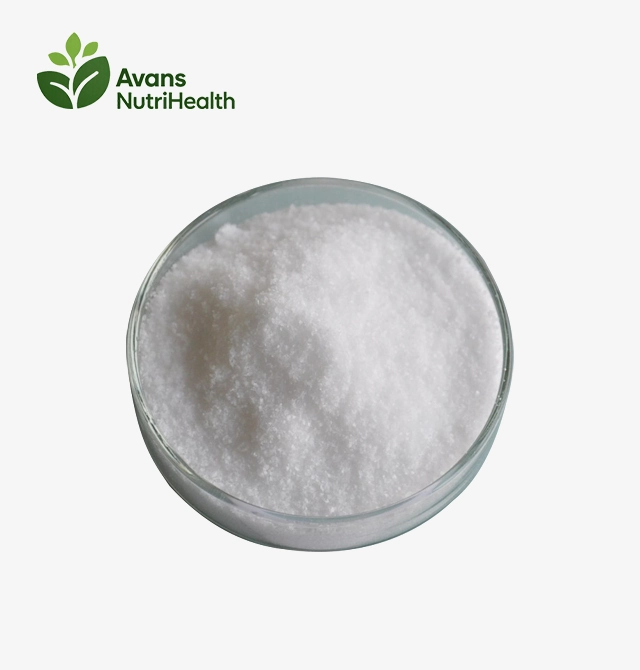
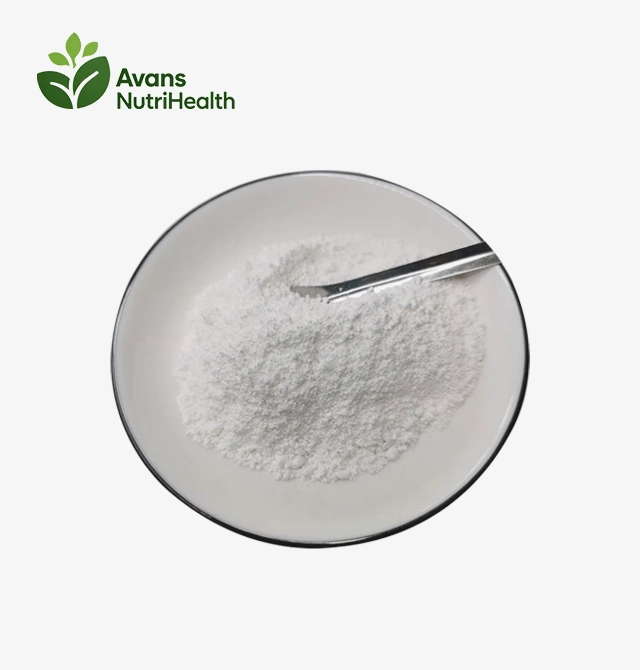
Appearance: White crystalline powder
Origin: China
Stocks: In stock
Certificate: ISO,USDA, HACCP, FSSC22000,HALAL,etc.
CAS no: 81028 -91 -3
Application: Food, beverages, nutraceuticals, Sports Supplement
- Product Description
D-Fructose-1,6-Diphosphate Trisodium Salt Octahydrate
Avans NutriHealth delivers pharmaceutical-grade D-Fructose-1,6-Diphosphate Trisodium Salt Octahydrate through its manufacturing entity, Avans (Qingdao) NutriHealth Technology Co., Ltd. Our product maintains ≥98.0% purity via enzymatic assay, with strictly controlled water content ranging 23%–26% verified through Karl Fischer titration to ensure octahydrate stoichiometry. This white crystalline powder features exceptional solubility characteristics and thermodynamic stability, with endotoxin levels below 0.3 EU/mg for injectable-grade applications. Manufactured under ISO, HACCP, and FSSC22000 certifications, our formulation addresses critical industry challenges in ischemic cellular energy failure through superior phosphate donation compared to standard calcium or magnesium variants.
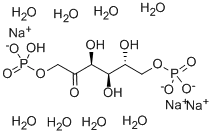
What Is This Metabolic Compound?
It is a specific salt form of the glycolytic intermediate fructose-1,6-bisphosphate. This is a major regulatory point in the Embden-Meyerhof-Parnas pathway . It directly affects crucial enzymes such as phosphofructokinase and pyruvate kinase .
This chemical offers immediate metabolic assistance in hypoxic circumstances where normal glucose metabolism is hindered. The trisodium formulation avoids intrinsic solubility restrictions of acid forms and permits high-concentration parenteral preparations necessary for critical care treatment.
This helps your applications be taken up systematically quickly and keeps on making ATP in times of cellular stress. The octahydrate structure offers better storage stability than other hydration states.

Technical Specifications & Properties
|
Parameter
|
Specification
|
|
Appearance
|
White to off-white crystalline powder
|
|
Purity
|
≥98.0% (Enzymatic assay/HPLC)
|
|
Water Content
|
23%–26% (Karl Fischer)
|
|
pH (Aqueous Solution)
|
5.5–7.5
|
|
Heavy Metals
|
<10 ppm
|
|
Endotoxin Level
|
<0.3 EU/mg
|
|
Free Inorganic Phosphate
|
<1.5%
|
|
CAS Number
|
81028-91-3
|
|
Storage Conditions
|
Cool (<25°C), dry, sealed
|
The compound exhibits high hygroscopicity, requiring careful storage protocols. Its thermodynamic stability and rapid dissociation rate in aqueous environments distinguish it from lower-grade alternatives.
Unlike free acid forms that degrade rapidly, the trisodium salt maintains integrity during lyophilization and sterilization processes. This characteristic proves invaluable for pharmaceutical manufacturing workflows.
Diverse Industrial Applications
Surgical Support & Cardioplegic Solutions
This chemical is an important ingredient in cardioplegic solutions used in open heart surgery. Stabilisation of cell membranes and preservation of intracellular ATP pools during cardiac arrest and restart operations could prevent reperfusion harm.
Organ Preservation Technologies
D-Fructose-1,6-Diphosphate Trisodium Salt Octahydrate is a key ingredient in hypothermic preservation medium formulations for transplant logistics. It is effective at preventing cellular oedema in kidneys and livers during transit at 0-4°C.
The chemical supports glycolytic flow and meets the metabolic needs of preserved tissues without needing oxidative phosphorylation.
Sports Nutrition & Recovery Formulae
In specific metabolic therapy you can lessen muscle weariness and oppose lactic acidosis. The quick systemic absorption makes it useful for recovery formulations for high intensity athletes or patients recuperating from severe systemic shock.


Storage & Handling Guidelines
Proper Storage Maintains the Integrity of the Product During Its Shelf Life. Pack the material into fibre drums that are lined with multiple layers of sealed polythene bags.
Store in a cool (<25°C) place, with controlled humidity. - Add desiccant packs to prevent moisture absorption which causes caking and possible hydrolysis.
Solutions that have been dissolved should be sterilised by filtration (0.22 micron) rather than by autoclaving. The chemical is heat-labile and may be hydrolysed to fructose and inorganic phosphate by thermal sterilisation.
Handle the substance in clean, dry conditions to reduce the chance of contamination. Immediately reseal containers after use to prevent hygroscopic moisture uptake.

Rigorous Quality Control Standards
We support your purchasing decisions with our multi-faceted quality verification strategy. We focus on important aspects that directly affect your formulation performance and regulatory compliance.
Check of Water Content
Karl Fischer titration and thermogravimetric analysis (TGA) support the octahydrate stoichiometry. Deviations suggest incorrect crystallisation or deterioration during storage that may impact your applications.
Purity Assessment
Enzymatic tests and HPLC indicate the accurate amount of the active FDP molecule. We limit inorganic phosphate and chloride concentrations to separate the active medicinal ingredient from its breakdown products.
Biological Safety Testing
For any injectable-grade material, we have to do LAL testing to verify that the endotoxin levels are within the criteria for parenterals. Each batch is tested for sterility and visually inspected to ensure clear, colourless solutions.
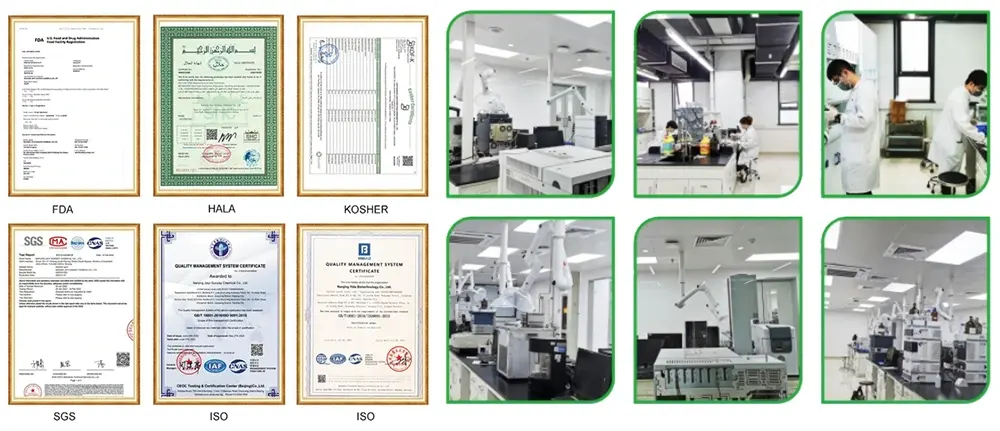
We are certified by ISO, HACCP, FSSC22000 and HALAL and we have a complete quality management system throughout the production process.
FAQ
Q: Why the powder cake while storage?
A: Caking is a sign of moisture absorption, which is a characteristic of hygroscopic compounds. This can lead to hydrolysis and decomposition. Always keep in tightly sealed containers with packs of desiccant, in cold, dry settings.
Q: How do the Trisodium Salt and Calcium Salt versions differ?
A: Trisodium salt is a lot more soluble in water than Calcium salt versions. Hence it is the drug of choice for intravenous preparations and for liquid supplements of high concentration where quick bioavailability is required.
Q: Do you have free inorganic phosphates in your product?
A: Our premium grades include less than 1.5% free inorganic phosphates. Colorimetric assays and ion chromatography confirm this, as the presence of excess amounts indicates breakdown of ester bonds.
Q: Is the material heat sterilisable?
A: While the Trisodium Octahydrate salt demonstrates greater stability than acid forms, dissolved solutions should undergo filtration sterilization rather than autoclaving to prevent thermal hydrolysis.
Q: How do you verify the Octahydrate structure?
A: We utilize Karl Fischer titration to determine water content (23%–26%) and thermogravimetric analysis to confirm the water exists as lattice-bound crystallization water, ensuring the correct octahydrate polymorph.
Partner With Avans NutriHealth
Ready to source premium-grade D-Fructose-1,6-Diphosphate Trisodium Salt Octahydrate for your applications? Contact our specialist at Lillian@avansnutri.com for quotations, technical specifications, and customized solutions.